


The transformation of the Ciao Piaggio moped into a pedal-assisted e-bike represents a bridge towards more sustainable and accessible mobility. At the heart of this transformation are two critical components: the battery and the motor system. Ambra Italia, aware of the importance of these parts, dedicates meticulous care to their verification, guaranteeing optimal performance and maximum safety.
Battery Load Test:
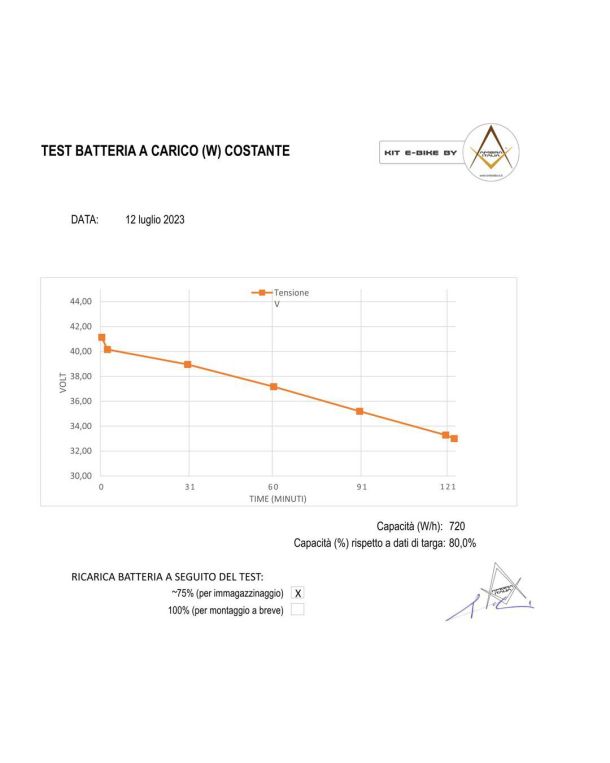
Each battery intended for Ambra Italia's conversion kits is subjected to a rigorous load test. This process is essential to evaluate the real capacity of the battery to support the load during use, thus ensuring autonomy and reliability. The test simulates real driving conditions, measuring the battery's response under load and ensuring that the promised specifications are not only theoretical but reflect everyday driving experience.
Engine System Operation Tests:
The beating heart of every e-bike is its engine, and Ambra Italia leaves nothing to chance. The engines are subjected to two types of tests:
Freewheeling: This test verifies that the display correctly indicates the speed of the drive wheel at various levels of assistance, using laser equipment to count the revolutions. This ensures precision and reliability in the information provided to the driver.
Road Test with Driver (Loaded): A fundamental test to evaluate the drop in speed and performance with the driver, compared to the empty test. It runs in two modes: limited to 25km/h and unlimited, using GPS to ensure the display accurately reflects real speed in all conditions.
Importance of Tests:
These tests are not just standard procedure; they represent Ambra Italia's commitment to providing products that exceed expectations in terms of quality, safety and performance. Through careful testing of critical components, Ambra Italia ensures that each transformed e-bike offers a superior riding experience, with maximum reliability.
The testing methodology adopted by Ambra Italia for batteries and engine systems is a fundamental pillar that supports the company's promise of quality and safety. These rigorous processes ensure that each conversion kit not only meets but exceeds current regulations, offering customers the peace of mind of a reliable e-bike ready to face the challenges of modern urban mobility.
- E-BIKE TRANSFORMATION
- HISTORY OF CIAO PIAGGIO
- EVENTS
- ASSEMBLY OF KITS PURCHASED ONLINE
- OUR AUTHORIZED WORKSHOPS
- MAINTENANCE OF E-BIKES AMBRA ITALIA
- ELECTRIC MICRO-MOBILITY
- SCHOOL PROJECT: INNOVATING WITH AMBRA ITALIA
- ELEGANT AND SUSTAINABLE MOBILITY FOR RECEPTION STRUCTURES
- THE WORLD THROUGH CIAO: OUR CUSTOMERS' STORIES
- RESEARCH AND INNOVATION
- BEHIND THE SCENES OF AMBRA ITALIA
- Smart cities and vintage mobility: why the future may have roots in the past
- Differences between Ciao SC and PX series frames and impact on transformation
- The people of Ciao
- Ciao endothermic vs Ciao transformed into an e-bike: analysis of operating costs
- How to read and correctly interpret the Operating Instructions
- Because Ciao is beautiful
- Ciao Piaggio and women: a bond to tell
- Interview with a technician: what is it like to work on an electric Ciao?
- The Silence of the Myth – Pedal-Powered Emotions with an Electric Ciao
- Comparative Analysis of Environmental Impact: Ciao Piaggio Endothermic vs Ciao transformed into an E-Bike
- Safety First: Checking the Safety Systems on Ciao Transformed into E-Bikes
- The Longevity of E-Bikes: How Ambra Italia Extends the Life Cycle of the Ciao Piaggio
- The role of Ciao Piaggio transformed into an e-bike in the challenges of contemporary mobility
- Urban Efficiency: How the Ciao Piaggio transformed into E-Bikes by Ambra Italia revolutionize city spaces with style
- Navigating the Regulations: Current and Future Legislation on Electric Micro Mobility
- Post-Transformation Personalization: Opportunities and Limitations
- Ciao Restoration: Options and Tips
- Comparison between the efficiency of an internal combustion engine and an electric engine in mobility
- Building Long-Lasting Customer Relationships: Strategies for Workshops
- Electric rebirth: the Ciao Piaggio in the era of micro mobility
- Ciao Piaggio in cinema and pop culture
- Electricity System Integration: Challenges and Solutions
- Document Writing Philosophy: Everything Under Control
- Micro-Electric Mobility vs. Long-Distance Electric Mobility: Analysis and Perspectives
- The technology behind the myth: mechanical innovations of the Ciao Piaggio
- Compliance with Regulations: Safety and Certifications
- Steps towards Authorization: How to Become an Authorized Ambra Italia Workshop
- Cleaning and Care of your Ciao transformed into an E-Bike: Tips for Aesthetic Maintenance
- The Operating Instructions and Other Documents for the Assembly and Control of the Processes
- Micro Mobility and Social Responsibility: How Companies Can Make a Difference
- From work to free time: the Ciao Piaggio as a symbol of freedom
- The Materials Used
- From Niche to Mainstream: The Evolution of the Electric Micro Mobility Market
- Joining the Ambra Italia Network: Advantages and Opportunities for New Workshops
- Tests on Critical Components: battery and motor system
- Competing icons
- The Ciao and the urban mobility revolution
- E-Bike or electric motorbike? The choice of the type of transformation determines the approval
- The Role of Electric Micro-Mobility in Reducing Urban Pollution
- Collaborating to Innovate: The Flow of Information between Headquarters and Workshops
- Optimize the battery life of your Ambra Italia e-bike
- Quality Controls on Materials
- Design evolution
- Structural Problems
- Security and Micro Mobility. Standards and Recommended Practices for Electric Driving
- The Emoving Days 2024
- The components of the kit: panoramic
- Excellence in the service: Ambra Italia quality standards
- Basic maintenance of the Ambra Italia-Bike: step by step Guide for Newfits
- Keep the original design
- The future is here
- Birth of an icon