


In the process of transforming the Ciao Piaggio into an e-bike, Ambra Italia faced numerous technical challenges, but always kept an eye on the original design that made this moped an icon of Made in Italy. This article explores the materials and solutions adopted in the process, demonstrating how technical innovation can coexist with respect for tradition.
Mechanical Part: Innovation Meets Tradition
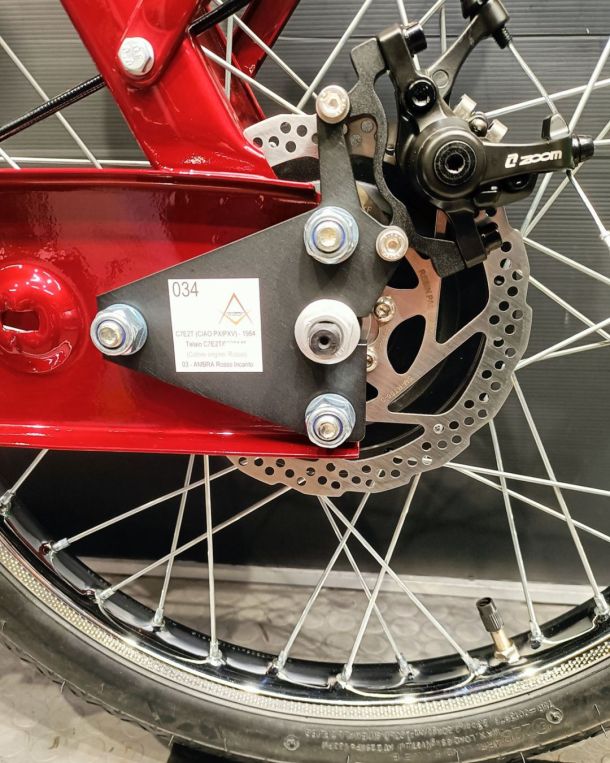
The use of Ergal 7075, an aeronautical structural aluminium, for the structural components of the rear axle, is not a random choice. This material, known for its lightness and resistance, made it possible to respect the structural requirements without compromising the original design. Attention to detail is also reflected in the choice of a 40/62/12 sized watertight bearing for the coupling between the supports on the right side, ensuring durability and reliability. The reinforcing side panels, made of laser-shaped steel of the same thickness as the frame and riveted in strategic points, together with the battery support plate in Peraluman, guarantee the necessary elasticity and structural resistance of the entire cradle, which had been weakened by the removal of the internal combustion engine.
Design Process: The Aesthetic Challenge
Respect for the original design guided every decision, from the geometries of the structural components to the coupling of the engine to the frame. The choice to use the black plastic side panels of the Ciao PX series and the addition of an aluminum cup for the exit of the motor cables demonstrate a commitment to maintaining aesthetics while incorporating the necessary technical modifications. The mechanical processing of the frame allowed the insertion of the battery in a harmonious way, preserving the visual appearance of the vehicle.
Electrical Part: Functionality and Design
The selection of a BAFANG engine for the powertrain reflects the pursuit of reliable and long-lasting performance. The intuitive interface of the display and the electrical assistance management system guarantee an optimal driving experience, while the adoption of a powerful and filtered 36/12 VDC converter ensures compatibility with auxiliary devices such as GPS Tracking, which the customer could install on board. The choice of LED bulbs for the lights with the same total amount of light (lumens) as the originals and a motorcycle-style horn integrates modern functionality without clashing with the classic design.
A Marriage between Past and Future
In conclusion, the transformation of the Ciao Piaggio into an e-bike by Ambra Italia represents an example of how innovation can be guided by respect for tradition. The use of advanced materials and thoughtful design solutions not only meets the needs of modern and sustainable mobility but pays homage to the legacy of an Italian classic. From this perspective, Ambra Italia does not limit itself to producing simple e-bikes but continues to weave the story of a design icon, demonstrating that technology can enrich heritage without overwriting it.
- E-BIKE TRANSFORMATION
- HISTORY OF CIAO PIAGGIO
- EVENTS
- ASSEMBLY OF KITS PURCHASED ONLINE
- OUR AUTHORIZED WORKSHOPS
- MAINTENANCE OF E-BIKES AMBRA ITALIA
- ELECTRIC MICRO-MOBILITY
- SCHOOL PROJECT: INNOVATING WITH AMBRA ITALIA
- ELEGANT AND SUSTAINABLE MOBILITY FOR RECEPTION STRUCTURES
- THE WORLD THROUGH CIAO: OUR CUSTOMERS' STORIES
- RESEARCH AND INNOVATION
- BEHIND THE SCENES OF AMBRA ITALIA
- Smart cities and vintage mobility: why the future may have roots in the past
- Differences between Ciao SC and PX series frames and impact on transformation
- The people of Ciao
- Ciao endothermic vs Ciao transformed into an e-bike: analysis of operating costs
- How to read and correctly interpret the Operating Instructions
- Because Ciao is beautiful
- Ciao Piaggio and women: a bond to tell
- Interview with a technician: what is it like to work on an electric Ciao?
- The Silence of the Myth – Pedal-Powered Emotions with an Electric Ciao
- Comparative Analysis of Environmental Impact: Ciao Piaggio Endothermic vs Ciao transformed into an E-Bike
- Safety First: Checking the Safety Systems on Ciao Transformed into E-Bikes
- The Longevity of E-Bikes: How Ambra Italia Extends the Life Cycle of the Ciao Piaggio
- The role of Ciao Piaggio transformed into an e-bike in the challenges of contemporary mobility
- Urban Efficiency: How the Ciao Piaggio transformed into E-Bikes by Ambra Italia revolutionize city spaces with style
- Navigating the Regulations: Current and Future Legislation on Electric Micro Mobility
- Post-Transformation Personalization: Opportunities and Limitations
- Ciao Restoration: Options and Tips
- Comparison between the efficiency of an internal combustion engine and an electric engine in mobility
- Building Long-Lasting Customer Relationships: Strategies for Workshops
- Electric rebirth: the Ciao Piaggio in the era of micro mobility
- Ciao Piaggio in cinema and pop culture
- Electricity System Integration: Challenges and Solutions
- Document Writing Philosophy: Everything Under Control
- Micro-Electric Mobility vs. Long-Distance Electric Mobility: Analysis and Perspectives
- The technology behind the myth: mechanical innovations of the Ciao Piaggio
- Compliance with Regulations: Safety and Certifications
- Steps towards Authorization: How to Become an Authorized Ambra Italia Workshop
- Cleaning and Care of your Ciao transformed into an E-Bike: Tips for Aesthetic Maintenance
- The Operating Instructions and Other Documents for the Assembly and Control of the Processes
- Micro Mobility and Social Responsibility: How Companies Can Make a Difference
- From work to free time: the Ciao Piaggio as a symbol of freedom
- The Materials Used
- From Niche to Mainstream: The Evolution of the Electric Micro Mobility Market
- Joining the Ambra Italia Network: Advantages and Opportunities for New Workshops
- Tests on Critical Components: battery and motor system
- Competing icons
- The Ciao and the urban mobility revolution
- E-Bike or electric motorbike? The choice of the type of transformation determines the approval
- The Role of Electric Micro-Mobility in Reducing Urban Pollution
- Collaborating to Innovate: The Flow of Information between Headquarters and Workshops
- Optimize the battery life of your Ambra Italia e-bike
- Quality Controls on Materials
- Design evolution
- Structural Problems
- Security and Micro Mobility. Standards and Recommended Practices for Electric Driving
- The Emoving Days 2024
- The components of the kit: panoramic
- Excellence in the service: Ambra Italia quality standards
- Basic maintenance of the Ambra Italia-Bike: step by step Guide for Newfits
- Keep the original design
- The future is here
- Birth of an icon