


In the 1960s, a period characterized by great social and cultural changes, Ciao Piaggio was born, destined to become a timeless symbol of freedom and innovation. This article explores the origins of the Ciao, analyzing how the trends of the time have influenced its design and popularity.
Social context of the 60s and the impact of the '68 movement:
The 1960s were a decade of profound change, characterized by an atmosphere of optimism and a strong desire for renewal. Economic growth, combined with a growing need for independence and individual mobility, laid the foundations for the birth of innovative and accessible vehicles. In this period of transformation, Ciao Piaggio affirmed himself as a symbol of freedom, responding perfectly to the expectations of a young and dynamic generation.
The climate of change was largely fueled by the youth fervor which culminated in the global movement of '68, a series of student protests, strikes and social movements that spread all over the world, from Paris to Prague, from Mexico City to Tokyo . These movements asked for greater civil rights, a more free and more inclusive education, a less authoritarian and more participatory policy, and a strong criticism of consumerism and ongoing wars, such as the conflict in Vietnam.
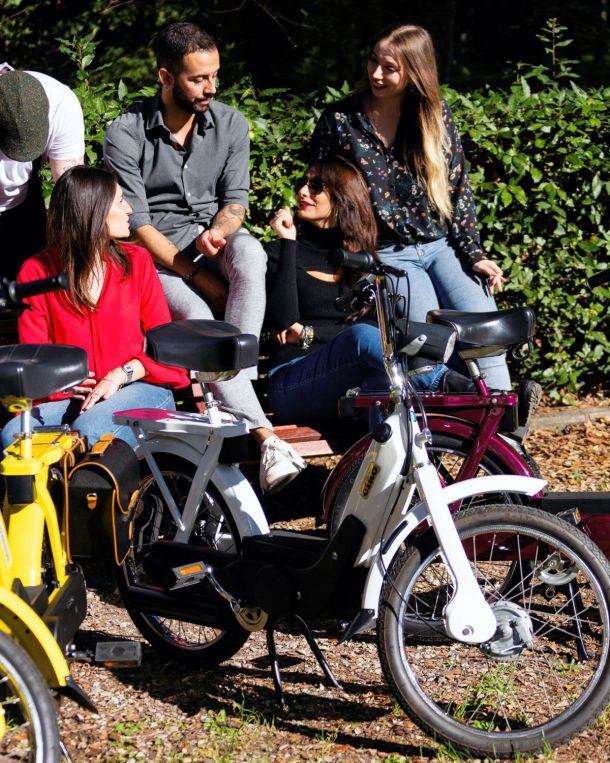
In this context of revolt and desire for freedom, Ciao Piaggio emerged not only as a means of practical, economic and fashionable transport, but also as a vehicle that embodied the spirit of rebellion and independence of youth. By offering a mobility solution that promoted autonomy and facilitated access to new spaces and opportunities, Ciao quickly became an icon of this new horizon of freedom.
The simplicity of use and accessibility of the hello made it particularly attractive to young people, who saw in the moped a tool to explore, meet and, in some cases, organize themselves. In an era in which the possession of a car remained out of the reach of many, the hello offered a form of personal emancipation and a way to escape the conventions and limits imposed by traditional society.
In addition, the innovative design and the captivating aesthetic of the Ciao Piaggio reflected the tendency towards a more liberal and open lifestyle, in line with the new cultural and artistic expressions that were emerging. The ability of hello to adapt both to practical needs and to the aesthetic aspirations of youth made it a lasting symbol of that period of change.
In summary, Ciao Piaggio was not only witness but also the protagonist of the climate of change in the 1960s and the movement of '68, offering young people a means to affirm their identity and aspirations in an era of significant social and cultural transformation .
The revolutionary design of the Ciao:
Ciao Piaggio distinguished himself for his minimalist and functional minimalist design, which broke with the traditional aesthetic of mopeds of the time. Its light structure, the reliable engine and the lack of gearbox made the hello accessible to a large audience, including those who had never guided a moped before. The Design of the Ciao reflected the spirit of freedom and the innovation that characterized the 1960s, making it immediately popular among young people.
The cultural impact of the Ciao:
The success of the Ciao went beyond its functionality as a means of transport; It became a cultural icon, representing an era of change and new urban mobility. Hello was more than a simple moped; It was a lifestyle, a symbol of independence and a means through which youth could express itself.
In conclusion, the birth of Ciao Piaggio in the 1960s marked the beginning of a new era in personal mobility. With its innovative design and its impact on youth culture, the hello was not only a product of its time, but a precursor of future trends in micro-motor. Today, while we look at the challenges of sustainable urban mobility, the Ciao remains a powerful symbol of the ingenuity and vision that will continue to inspire future generations.
- E-BIKE TRANSFORMATION
- HISTORY OF CIAO PIAGGIO
- EVENTS
- ASSEMBLY OF KITS PURCHASED ONLINE
- OUR AUTHORIZED WORKSHOPS
- MAINTENANCE OF E-BIKES AMBRA ITALIA
- ELECTRIC MICRO-MOBILITY
- SCHOOL PROJECT: INNOVATING WITH AMBRA ITALIA
- ELEGANT AND SUSTAINABLE MOBILITY FOR RECEPTION STRUCTURES
- THE WORLD THROUGH CIAO: OUR CUSTOMERS' STORIES
- RESEARCH AND INNOVATION
- BEHIND THE SCENES OF AMBRA ITALIA
- Smart cities and vintage mobility: why the future may have roots in the past
- Differences between Ciao SC and PX series frames and impact on transformation
- The people of Ciao
- Ciao endothermic vs Ciao transformed into an e-bike: analysis of operating costs
- How to read and correctly interpret the Operating Instructions
- Because Ciao is beautiful
- Ciao Piaggio and women: a bond to tell
- Interview with a technician: what is it like to work on an electric Ciao?
- The Silence of the Myth – Pedal-Powered Emotions with an Electric Ciao
- Comparative Analysis of Environmental Impact: Ciao Piaggio Endothermic vs Ciao transformed into an E-Bike
- Safety First: Checking the Safety Systems on Ciao Transformed into E-Bikes
- The Longevity of E-Bikes: How Ambra Italia Extends the Life Cycle of the Ciao Piaggio
- The role of Ciao Piaggio transformed into an e-bike in the challenges of contemporary mobility
- Urban Efficiency: How the Ciao Piaggio transformed into E-Bikes by Ambra Italia revolutionize city spaces with style
- Navigating the Regulations: Current and Future Legislation on Electric Micro Mobility
- Post-Transformation Personalization: Opportunities and Limitations
- Ciao Restoration: Options and Tips
- Comparison between the efficiency of an internal combustion engine and an electric engine in mobility
- Building Long-Lasting Customer Relationships: Strategies for Workshops
- Electric rebirth: the Ciao Piaggio in the era of micro mobility
- Ciao Piaggio in cinema and pop culture
- Electricity System Integration: Challenges and Solutions
- Document Writing Philosophy: Everything Under Control
- Micro-Electric Mobility vs. Long-Distance Electric Mobility: Analysis and Perspectives
- The technology behind the myth: mechanical innovations of the Ciao Piaggio
- Compliance with Regulations: Safety and Certifications
- Steps towards Authorization: How to Become an Authorized Ambra Italia Workshop
- Cleaning and Care of your Ciao transformed into an E-Bike: Tips for Aesthetic Maintenance
- The Operating Instructions and Other Documents for the Assembly and Control of the Processes
- Micro Mobility and Social Responsibility: How Companies Can Make a Difference
- From work to free time: the Ciao Piaggio as a symbol of freedom
- The Materials Used
- From Niche to Mainstream: The Evolution of the Electric Micro Mobility Market
- Joining the Ambra Italia Network: Advantages and Opportunities for New Workshops
- Tests on Critical Components: battery and motor system
- Competing icons
- The Ciao and the urban mobility revolution
- E-Bike or electric motorbike? The choice of the type of transformation determines the approval
- The Role of Electric Micro-Mobility in Reducing Urban Pollution
- Collaborating to Innovate: The Flow of Information between Headquarters and Workshops
- Optimize the battery life of your Ambra Italia e-bike
- Quality Controls on Materials
- Design evolution
- Structural Problems
- Security and Micro Mobility. Standards and Recommended Practices for Electric Driving
- The Emoving Days 2024
- The components of the kit: panoramic
- Excellence in the service: Ambra Italia quality standards
- Basic maintenance of the Ambra Italia-Bike: step by step Guide for Newfits
- Keep the original design
- The future is here
- Birth of an icon