


Transforming a classic moped like the Piaggio Ciao into a modern e-bike is a process that requires precision, attention to detail and a deep understanding of the technologies involved. One of the main challenges in this process is the integration of the electrical system without compromising the aesthetics and balance of the original design. In this article, we will explore the challenges related to this integration and the solutions that Ambra Italia has developed to overcome them, while maintaining the timeless charm of Ciao.
Challenges in Electricity System Integration
- Preserve the original aesthetic
One of the main challenges is integrating modern electrical components such as the battery, motor, and cables without altering the external appearance of the Ciao. It is essential that the modifications are discreet and unobtrusive, maintaining the clean line and iconic design of the moped.
- Design Balance and Weight Distribution
Adding electrical components can alter the balance of the vehicle, affecting handling and stability. It is essential to distribute the weight evenly and maintain a low center of gravity, to ensure that the e-bike maintains the same riding characteristics as the original Ciao.
- Component Compatibility
Integrating new electrical components into a chassis designed for a combustion engine requires attention to component compatibility. This includes the need for minimal structural changes to house the battery and motor without compromising but actually increasing the safety and reliability of the vehicle.
Innovative Solutions by Ambra Italia
- Battery Compartment Design
Ambra Italia has developed a drum support specifically designed to integrate into the frame of the Ciao without altering its external appearance. This support is tailor-made to adapt perfectly to all Ciao series, housing the battery instead of the internal combustion engine, thus keeping the vehicle's center of gravity low and optimizing stability. The lid of the central cradle has also been designed to maintain as much as possible the design of the original one, ensuring protection from water and ventilation of the electronic control and power components.
- Compact and Powerful Motor
The use of compact and powerful electric motors allows you to reduce the footprint and maintain the clean aesthetics of the Ciao. The electric motor, with Ergal supports designed by Ambra Italia, easily integrate into the existing structure of the frame without the need for significant modifications.
- Hidden Cables and Smart Connections
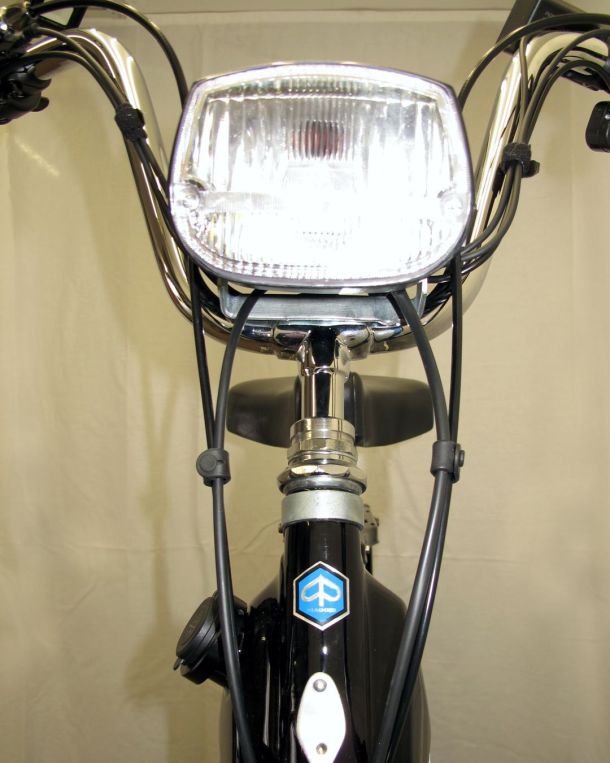
To preserve the clean appearance of the Ciao, Ambra Italia uses hidden wiring solutions and smart connections. The cables are routed inside the frame and assembled in a way that minimizes visibility and maintains aesthetic integrity.
- Electronic Control
The control software allows you to optimize the performance of the electrical system, ensuring smooth response and efficient energy management. This control system is customizable to suit the user's driving preferences.
Benefits of Efficient Integration
- Intact Aesthetics and Design
Thanks to innovative solutions, the Ciao transformed into an e-bike retains the classic look that made it famous, while offering all the advantages of modern technology.
- Improved Driving Experience
The balanced integration of the electrical components improves the stability and handling of the vehicle, ensuring a pleasant and safe driving experience.
- Efficiency
Optimising the electrical system allows for efficient use of energy, extending battery life and improving the range of the e-bike.
The integration of the electrical system into a Piaggio Ciao transformed into an e-bike represents a significant challenge, but the solutions adopted by Ambra Italia demonstrate that it is possible to maintain the aesthetics and balance of the original design. Thanks to a combination of advanced components and intelligent integration techniques, the transformed Ciao offers a modern mobility experience without sacrificing the moped's historic charm.
- E-BIKE TRANSFORMATION
- HISTORY OF CIAO PIAGGIO
- EVENTS
- ASSEMBLY OF KITS PURCHASED ONLINE
- OUR AUTHORIZED WORKSHOPS
- MAINTENANCE OF E-BIKES AMBRA ITALIA
- ELECTRIC MICRO-MOBILITY
- SCHOOL PROJECT: INNOVATING WITH AMBRA ITALIA
- ELEGANT AND SUSTAINABLE MOBILITY FOR RECEPTION STRUCTURES
- THE WORLD THROUGH CIAO: OUR CUSTOMERS' STORIES
- RESEARCH AND INNOVATION
- BEHIND THE SCENES OF AMBRA ITALIA
- Smart cities and vintage mobility: why the future may have roots in the past
- Differences between Ciao SC and PX series frames and impact on transformation
- The people of Ciao
- Ciao endothermic vs Ciao transformed into an e-bike: analysis of operating costs
- How to read and correctly interpret the Operating Instructions
- Because Ciao is beautiful
- Ciao Piaggio and women: a bond to tell
- Interview with a technician: what is it like to work on an electric Ciao?
- The Silence of the Myth – Pedal-Powered Emotions with an Electric Ciao
- Comparative Analysis of Environmental Impact: Ciao Piaggio Endothermic vs Ciao transformed into an E-Bike
- Safety First: Checking the Safety Systems on Ciao Transformed into E-Bikes
- The Longevity of E-Bikes: How Ambra Italia Extends the Life Cycle of the Ciao Piaggio
- The role of Ciao Piaggio transformed into an e-bike in the challenges of contemporary mobility
- Urban Efficiency: How the Ciao Piaggio transformed into E-Bikes by Ambra Italia revolutionize city spaces with style
- Navigating the Regulations: Current and Future Legislation on Electric Micro Mobility
- Post-Transformation Personalization: Opportunities and Limitations
- Ciao Restoration: Options and Tips
- Comparison between the efficiency of an internal combustion engine and an electric engine in mobility
- Building Long-Lasting Customer Relationships: Strategies for Workshops
- Electric rebirth: the Ciao Piaggio in the era of micro mobility
- Ciao Piaggio in cinema and pop culture
- Electricity System Integration: Challenges and Solutions
- Document Writing Philosophy: Everything Under Control
- Micro-Electric Mobility vs. Long-Distance Electric Mobility: Analysis and Perspectives
- The technology behind the myth: mechanical innovations of the Ciao Piaggio
- Compliance with Regulations: Safety and Certifications
- Steps towards Authorization: How to Become an Authorized Ambra Italia Workshop
- Cleaning and Care of your Ciao transformed into an E-Bike: Tips for Aesthetic Maintenance
- The Operating Instructions and Other Documents for the Assembly and Control of the Processes
- Micro Mobility and Social Responsibility: How Companies Can Make a Difference
- From work to free time: the Ciao Piaggio as a symbol of freedom
- The Materials Used
- From Niche to Mainstream: The Evolution of the Electric Micro Mobility Market
- Joining the Ambra Italia Network: Advantages and Opportunities for New Workshops
- Tests on Critical Components: battery and motor system
- Competing icons
- The Ciao and the urban mobility revolution
- E-Bike or electric motorbike? The choice of the type of transformation determines the approval
- The Role of Electric Micro-Mobility in Reducing Urban Pollution
- Collaborating to Innovate: The Flow of Information between Headquarters and Workshops
- Optimize the battery life of your Ambra Italia e-bike
- Quality Controls on Materials
- Design evolution
- Structural Problems
- Security and Micro Mobility. Standards and Recommended Practices for Electric Driving
- The Emoving Days 2024
- The components of the kit: panoramic
- Excellence in the service: Ambra Italia quality standards
- Basic maintenance of the Ambra Italia-Bike: step by step Guide for Newfits
- Keep the original design
- The future is here
- Birth of an icon