


The Piaggio Ciao is more than just a moped; It is a symbol of Italian culture and a piece of mechanical history. When customers choose to turn their Ciao into an e-bike, they often also want to restore the vehicle to its original glory. This article provides a comprehensive guide to the restoration options available and offers practical advice for workshops and customers tackling this fascinating project.
The transformation of a Piaggio Ciao into an e-bike offers an extraordinary opportunity for restoration. Not only do you upgrade your vehicle with modern technology, but you can also return the Ciao to the look and functionality it had in its best days. This process, however, requires attention to detail and a certain amount of technical expertise. Let's take a look at the restorative options available and some practical tips for getting the best results.
Restoration Options
- Cleaning of mechanical components using ultrasonics.
Ultrasonic cleaning is an advanced technique that uses high-frequency sound waves to remove dirt, grease, and residue from mechanical components. This method is particularly effective for cleaning complex and hard-to-reach parts with traditional methods (in-depth link in Italian: here).
- Efficiency: Removes impurities even in the most hidden places without damaging the components.
- Application: On all small metal parts (bolts, gears, etc.) and small plastic parts.
- Frame Reset
The frame is the fundamental structural element of the Ciao. During restoration, the frame can be sandblasted and repainted to eliminate rust and surface damage. This not only improves the aesthetics of the vehicle but also ensures its durability and safety.
- Sandblasting: Removes rust and old paintwork.
- Welding: Holes often must be plugged (e.g. on the rear fender where the license plate was housed)
- Small grouting interventions: although rare, it may happen that the surfaces of the tank must be restored. In the event of significant defects in the mudguards, it is advisable to replace them directly.
- Painting: Following the sandblasting process, use high-quality underlays and paints for a long-lasting result or, better, contact a body shop with proven experience.
- Chrome Components & Bolts
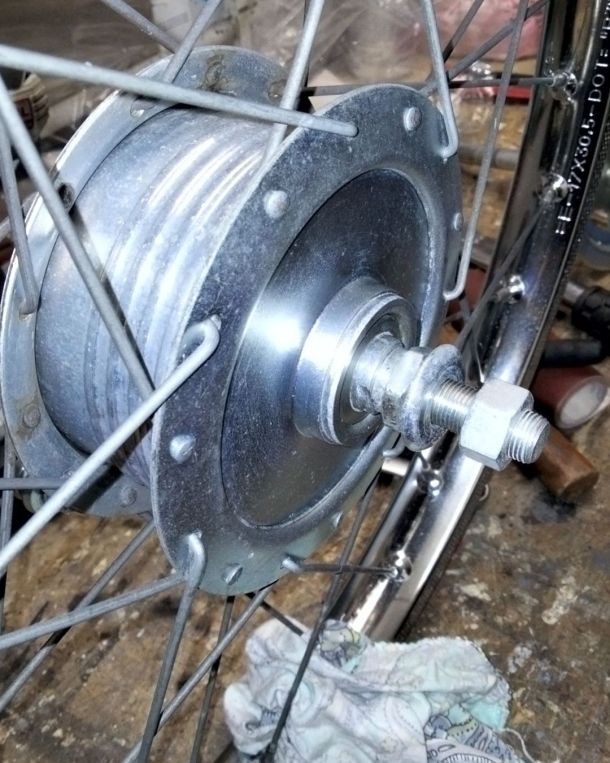
Chrome-plated parts such as handlebars, front fork washers, rims and cranks can be restored by chrome plating or replaced. It is recommended, as far as possible, to chrome these parts to keep the original components, both to maintain originality as much as possible, but also for technical reasons. In fact, sometimes the spare parts do not have the same quality and tolerances as the originals (for example: the cranks). Chrome plating not only protects against corrosion but also gives a shiny and new look to the vehicle.
- Cleaning the original chrome plating: Use specific products to remove oxidation and stains. Particularly satisfactory results are often achieved without having to re-chrome the component. The rear rim is supplied new, already assembled, with the Ambra Italia kit.
- Replacement: Consider replacing components that are too damaged, keeping in mind what was said above.
- Chrome Plating: Contact a reputable Chrome Workshop/Workshop. For the chrome plating of the handlebar fifth wheels, provide a treatment with minimum thickness due to the fine thread.
Practical advice
- Photographic documentation
Before starting the restoration, it is helpful to take detailed photos of the Ciao. This will help you remember how the original parts were assembled and provide a reference when reassembling.
- Photograph from different angles: Make sure you have clear images of every part of the vehicle.
- Component Catalog
Keep a catalog of components that need replacement or restoration. This helps you organize your work and avoid forgetting important parts. Organize the Catalog by parts of the Ciao (for example: front; back; plastic parts; saddle; pedals and drivetrain). Consider the different components that are supplied new with the Conversion Kit.
- Checklists: Use checklists to monitor the status of each component.
- Collaboration with Specialized Workshops
To ensure high-quality work, consider working with workshops that specialize in restoring classic vehicles. These workshops have the experience and tools necessary to carry out a thorough restoration.
- Expert research: Choose professionals with good reviews and a proven track record.
The restoration of the Ciao Piaggio during its transformation into an e-bike is a project that combines passion, technical expertise, and love for historic vehicles. By following these guidelines, both workshops and customers can ensure that their Ciao not only becomes an efficient e-bike, but also a restored piece of Italian history. Ambra Italia supports this process by providing high-quality kits and practical advice for a restoration that meets the brand's high standards.
- E-BIKE TRANSFORMATION
- HISTORY OF CIAO PIAGGIO
- EVENTS
- ASSEMBLY OF KITS PURCHASED ONLINE
- OUR AUTHORIZED WORKSHOPS
- MAINTENANCE OF E-BIKES AMBRA ITALIA
- ELECTRIC MICRO-MOBILITY
- SCHOOL PROJECT: INNOVATING WITH AMBRA ITALIA
- ELEGANT AND SUSTAINABLE MOBILITY FOR RECEPTION STRUCTURES
- THE WORLD THROUGH CIAO: OUR CUSTOMERS' STORIES
- RESEARCH AND INNOVATION
- BEHIND THE SCENES OF AMBRA ITALIA
- Smart cities and vintage mobility: why the future may have roots in the past
- Differences between Ciao SC and PX series frames and impact on transformation
- The people of Ciao
- Ciao endothermic vs Ciao transformed into an e-bike: analysis of operating costs
- How to read and correctly interpret the Operating Instructions
- Because Ciao is beautiful
- Ciao Piaggio and women: a bond to tell
- Interview with a technician: what is it like to work on an electric Ciao?
- The Silence of the Myth – Pedal-Powered Emotions with an Electric Ciao
- Comparative Analysis of Environmental Impact: Ciao Piaggio Endothermic vs Ciao transformed into an E-Bike
- Safety First: Checking the Safety Systems on Ciao Transformed into E-Bikes
- The Longevity of E-Bikes: How Ambra Italia Extends the Life Cycle of the Ciao Piaggio
- The role of Ciao Piaggio transformed into an e-bike in the challenges of contemporary mobility
- Urban Efficiency: How the Ciao Piaggio transformed into E-Bikes by Ambra Italia revolutionize city spaces with style
- Navigating the Regulations: Current and Future Legislation on Electric Micro Mobility
- Post-Transformation Personalization: Opportunities and Limitations
- Ciao Restoration: Options and Tips
- Comparison between the efficiency of an internal combustion engine and an electric engine in mobility
- Building Long-Lasting Customer Relationships: Strategies for Workshops
- Electric rebirth: the Ciao Piaggio in the era of micro mobility
- Ciao Piaggio in cinema and pop culture
- Electricity System Integration: Challenges and Solutions
- Document Writing Philosophy: Everything Under Control
- Micro-Electric Mobility vs. Long-Distance Electric Mobility: Analysis and Perspectives
- The technology behind the myth: mechanical innovations of the Ciao Piaggio
- Compliance with Regulations: Safety and Certifications
- Steps towards Authorization: How to Become an Authorized Ambra Italia Workshop
- Cleaning and Care of your Ciao transformed into an E-Bike: Tips for Aesthetic Maintenance
- The Operating Instructions and Other Documents for the Assembly and Control of the Processes
- Micro Mobility and Social Responsibility: How Companies Can Make a Difference
- From work to free time: the Ciao Piaggio as a symbol of freedom
- The Materials Used
- From Niche to Mainstream: The Evolution of the Electric Micro Mobility Market
- Joining the Ambra Italia Network: Advantages and Opportunities for New Workshops
- Tests on Critical Components: battery and motor system
- Competing icons
- The Ciao and the urban mobility revolution
- E-Bike or electric motorbike? The choice of the type of transformation determines the approval
- The Role of Electric Micro-Mobility in Reducing Urban Pollution
- Collaborating to Innovate: The Flow of Information between Headquarters and Workshops
- Optimize the battery life of your Ambra Italia e-bike
- Quality Controls on Materials
- Design evolution
- Structural Problems
- Security and Micro Mobility. Standards and Recommended Practices for Electric Driving
- The Emoving Days 2024
- The components of the kit: panoramic
- Excellence in the service: Ambra Italia quality standards
- Basic maintenance of the Ambra Italia-Bike: step by step Guide for Newfits
- Keep the original design
- The future is here
- Birth of an icon