
Visit our page dedicated to the Schools project: HERE
At the heart of Ambra Italia's educational project, the transformation of the legendary Ciao Piaggio into an e-bike represents much more than just a technical exercise. For the students of the Technical and Professional Institutes involved, this project is configured as an educational journey that combines tradition and innovation, offering a unique opportunity to immerse themselves in the world of electric mobility. Each phase of the course, from assembly to configuration, allows young technicians to acquire practical and theoretical skills, laying the foundations for a professional future in the sustainable mobility sector.
Planning: The Fundamental Phase of the Process
Every major project requires careful planning, and the transformation of the Ciao Piaggio is no exception. Students begin with analysing the materials provided and preparing the workstation, an essential step to ensure that all subsequent steps are carried out in an orderly and safe manner.
Ambra Italia provides detailed documentation including operating instructions, technical data sheets and material for process management and control. These tools help students organize activities into precise stages, approaching each operation with clarity and method. In addition, the documentation introduces young technicians to the UNI EN 15194:2018 standard, which regulates e-bikes intended for circulation on public roads. Through the analysis of laboratory tests, students understand how design choices affect vehicle safety and performance.
Work on the Frame: When Mechanics and Precision Meet
The operational transformation begins with the preparation of the frame, a crucial moment in which mechanics and precision merge. The students, under the guidance of the technical instructions, disassemble the original components of the Ciao and proceed with the necessary modifications to accommodate the new electrical and mechanical components.
An important aspect of this phase is the installation of the steel reinforcement plates, and the battery holder made of Peraluman, a lightweight and durable material. This work not only strengthens the structure of the vehicle but also represents an opportunity for students to learn how to combine technical innovation and respect for classic design.
The Assembly of Electrical Components: The Technology
With the frame ready, we move on to the assembly of the electrical component, the technological heart of the project. Students install the lithium-ion battery equipped with an intelligent Battery Management System (BMS), learning how to monitor its state of charge and manage its safety. This moment represents an educational opportunity to understand the importance of sustainability and efficiency in modern energy systems.
The digital display and motor management controls are mounted on the handlebar, the 36V and 250W brushless motor is configured to ensure smooth and reliable performance. Thanks to its 45Nm torque, the motor allows for relaxing and effortless pedal assistance, providing students with a concrete example of the benefits of electric mobility.
At this stage, the ability to carry out the wiring accurately, both those on the handlebars and those on the former engine compartment, is of particular importance.
Rear Axle Assembly: Where Design and Functionality Meet
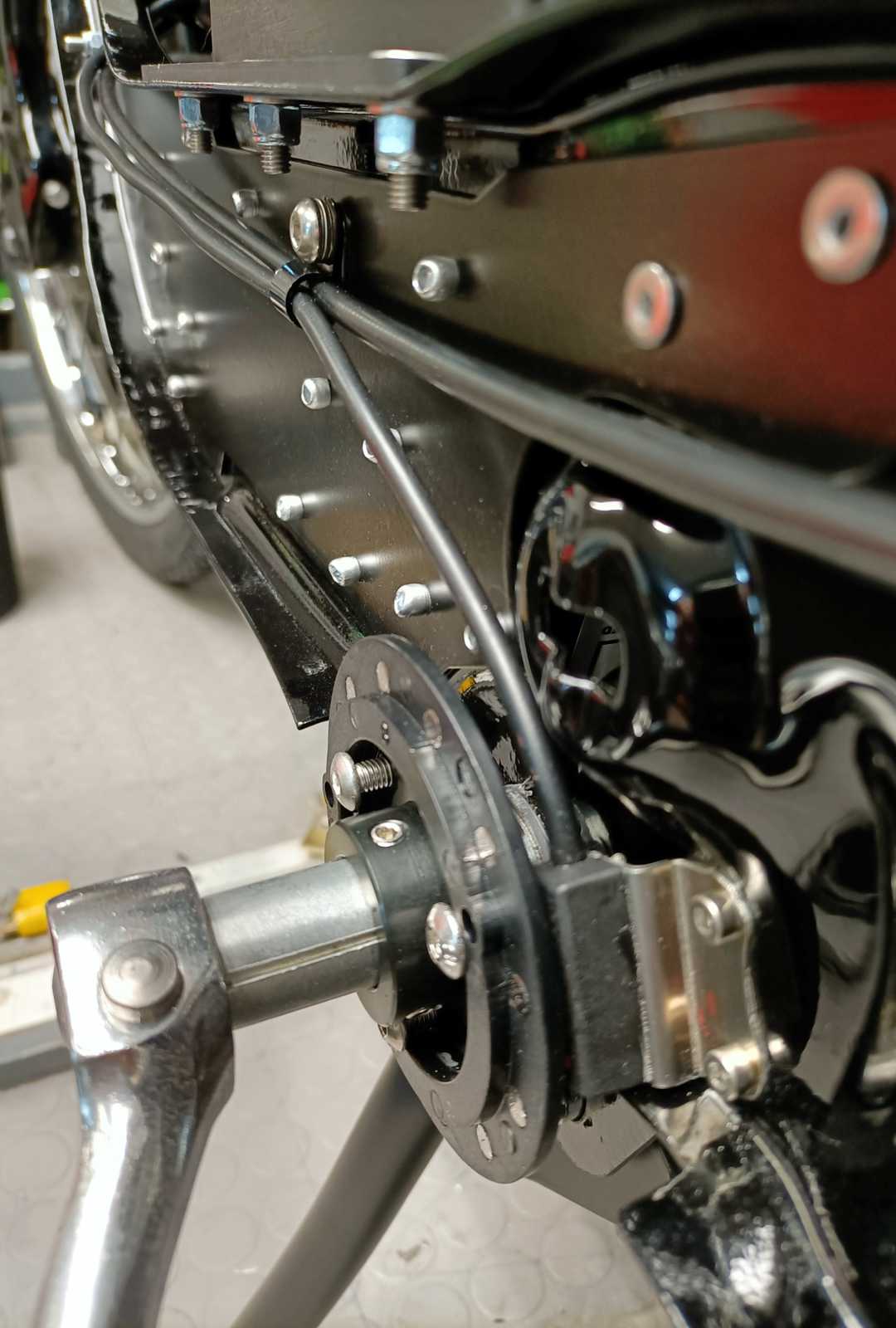
The rear axle represents one of the most technical phases of the project. The students assemble the drive wheel, the brake disc and the pedaling sensor, taking care of every detail to ensure safety and stability. The correct positioning of the motor power cable, for example, requires special attention, but any difficulties are addressed thanks to the technical support of Ambra Italia, which provides personalized assistance and explanatory material.
- E-BIKE TRANSFORMATION
- HISTORY OF CIAO PIAGGIO
- EVENTS
- ASSEMBLY OF KITS PURCHASED ONLINE
- OUR AUTHORIZED WORKSHOPS
- MAINTENANCE OF E-BIKES AMBRA ITALIA
- ELECTRIC MICRO-MOBILITY
- SCHOOL PROJECT: INNOVATING WITH AMBRA ITALIA
- ELEGANT AND SUSTAINABLE MOBILITY FOR RECEPTION STRUCTURES
- THE WORLD THROUGH CIAO: OUR CUSTOMERS' STORIES
- RESEARCH AND INNOVATION
- BEHIND THE SCENES OF AMBRA ITALIA
- Differences between Ciao SC and PX series frames and impact on transformation
- The people of Ciao
- Ciao endothermic vs Ciao transformed into an e-bike: analysis of operating costs
- How to read and correctly interpret the Operating Instructions
- Because Ciao is beautiful
- Ciao Piaggio and women: a bond to tell
- Interview with a technician: what is it like to work on an electric Ciao?
- The Silence of the Myth – Pedal-Powered Emotions with an Electric Ciao
- Comparative Analysis of Environmental Impact: Ciao Piaggio Endothermic vs Ciao transformed into an E-Bike
- Safety First: Checking the Safety Systems on Ciao Transformed into E-Bikes
- The Longevity of E-Bikes: How Ambra Italia Extends the Life Cycle of the Ciao Piaggio
- The role of Ciao Piaggio transformed into an e-bike in the challenges of contemporary mobility
- Urban Efficiency: How the Ciao Piaggio transformed into E-Bikes by Ambra Italia revolutionize city spaces with style
- Navigating the Regulations: Current and Future Legislation on Electric Micro Mobility
- Post-Transformation Personalization: Opportunities and Limitations
- Ciao Restoration: Options and Tips
- Comparison between the efficiency of an internal combustion engine and an electric engine in mobility
- Building Long-Lasting Customer Relationships: Strategies for Workshops
- Electric rebirth: the Ciao Piaggio in the era of micro mobility
- Ciao Piaggio in cinema and pop culture
- Electricity System Integration: Challenges and Solutions
- Document Writing Philosophy: Everything Under Control
- Micro-Electric Mobility vs. Long-Distance Electric Mobility: Analysis and Perspectives
- The technology behind the myth: mechanical innovations of the Ciao Piaggio
- Compliance with Regulations: Safety and Certifications
- Steps towards Authorization: How to Become an Authorized Ambra Italia Workshop
- Cleaning and Care of your Ciao transformed into an E-Bike: Tips for Aesthetic Maintenance
- The Operating Instructions and Other Documents for the Assembly and Control of the Processes
- Micro Mobility and Social Responsibility: How Companies Can Make a Difference
- From work to free time: the Ciao Piaggio as a symbol of freedom
- The Materials Used
- From Niche to Mainstream: The Evolution of the Electric Micro Mobility Market
- Joining the Ambra Italia Network: Advantages and Opportunities for New Workshops
- Tests on Critical Components: battery and motor system
- Competing icons
- The Ciao and the urban mobility revolution
- E-Bike or electric motorbike? The choice of the type of transformation determines the approval
- The Role of Electric Micro-Mobility in Reducing Urban Pollution
- Collaborating to Innovate: The Flow of Information between Headquarters and Workshops
- Optimize the battery life of your Ambra Italia e-bike
- Quality Controls on Materials
- Design evolution
- Structural Problems
- Security and Micro Mobility. Standards and Recommended Practices for Electric Driving
- The Emoving Days 2024
- The components of the kit: panoramic
- Excellence in the service: Ambra Italia quality standards
- Basic maintenance of the Ambra Italia-Bike: step by step Guide for Newfits
- Keep the original design
- The future is here
- Birth of an icon